Zoo 2: Animal Park
- 4.0
- Rating
- 10.00M
- Installs
- Free
- Price

 Analysis by App-foxy
Zoo 2: Animal Park caught my attention because it treats the zoo as more than a collection of animal pens. It is an adventure game about building, arranging, and caring for a place that gradually feels like your own. I spent time looking at how its friendly presentation supports the management side, and my overall impression is that it works best as a relaxed, ongoing project rather than a game built around constant pressure.
That distinction matters. If you want a fast action adventure with difficult combat, this is not the right direction. If you enjoy checking in, completing quests, improving a space, and watching a themed location become more attractive, the idea is much easier to appreciate. It is free to play, suitable for Everyone, and developed by upjers GmbH. The game has reached over ten million installs and holds a 4.0 average from roughly 297 thousand ratings, which gives a useful sense of its broad appeal without telling the whole story.
My first impression: a gentle zoo with a clear sense of place
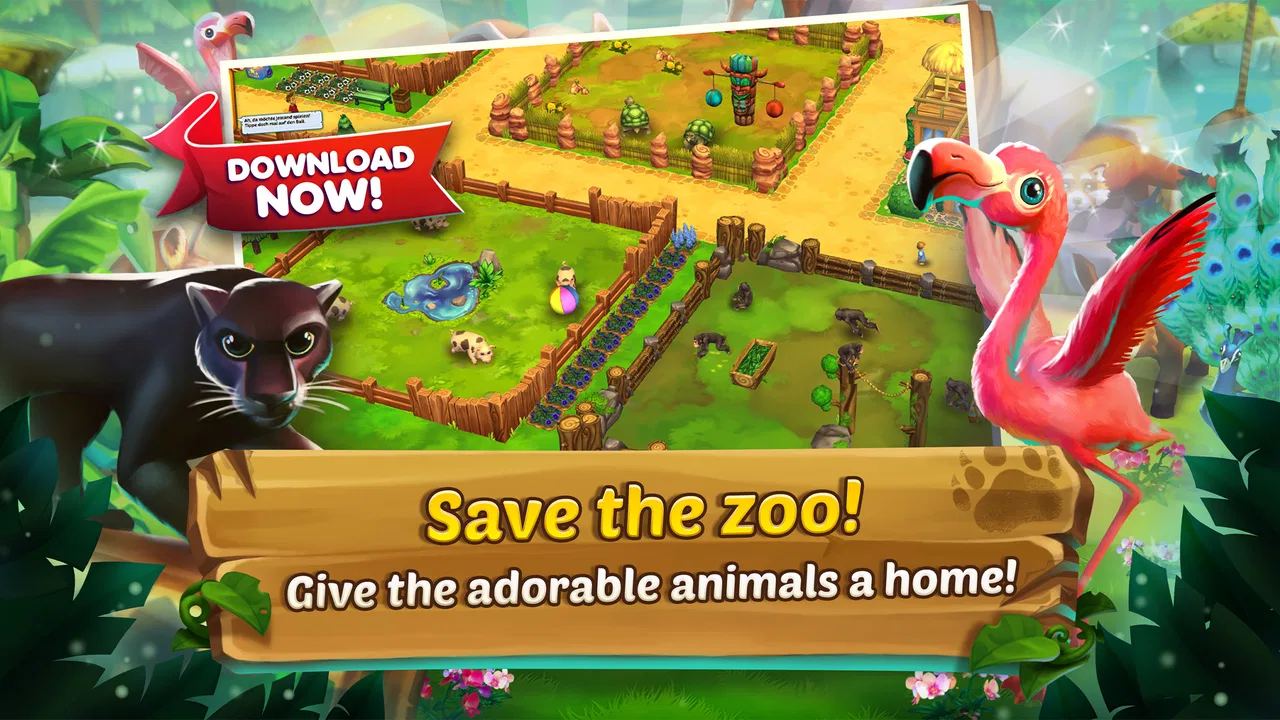
The opening experience is deliberately approachable. Rather than throwing complicated systems at me, it presents the zoo as a place I can understand visually: animals belong in enclosures, paths connect areas, and decorations help turn an empty space into something with personality. That clarity is one of the strongest parts of the game. I can usually tell what an object is for simply by looking at it, which makes the early learning curve comfortable.
You May Also Like

 Blood Strike: 2.5 Anniversary
Blood Strike’s Loadouts Turn Every Drop Into a Tactical Gamble
A close look at Blood Strike’s custom loadouts: how fast access to signature weapons reshapes its battle royale rhythm, rewards preparation, and narrows the gap between fights.

 Pandora - Music & Podcasts
Pandora’s Music Is Easy to Start, but Harder to Recover
Pandora’s strength is its low-effort path from a seed to a station. Its weak spot is how much confidence it asks you to place in connection, setup, and quiet recovery.

 8 Ball Pool
 Is Built on Rivalries, Rematches, and Routine
A close look at the rivalries, rematches, shared routines, and unanswered safety questions that turn a quick pool match into a persistent mobile community.

 Samsung Music
’s Quiet Strength Is Playing What You Already Own
Its reach comes less from spectacle than from dependable access to a personal library. That simplicity is both the app’s strongest retention engine and its ceiling.

 AccuWeather: Weather Radar
AccuWeather Review: A Quick, Clear Forecast for Everyday Decisions
For everyday plans, the best forecast is the one you can understand quickly. AccuWeather makes rain timing, radar, and local conditions easy to act on, with a few trade-offs.

 Hill Climb Racing
Why Hill Climb Racing Still Turns Crashes Into One More Run
A tiny car, a bumpy hill and one more upgrade: Hill Climb Racing keeps resurfacing because its simple chaos makes every near-miss feel personal.
More From Our News Desk
View All News


The art direction chooses warmth over realism. Animals are designed to look appealing and expressive, while the surroundings use bright colors and clean shapes. This gives the park a storybook quality, and it also makes the game feel suitable for younger players without making it completely uninteresting for adults. I found the visual language especially effective when the zoo began to fill out. A single enclosure can look plain at first, but nearby paths, scenery, and facilities gradually create a more convincing destination.
That visual growth is important because the central reward is not only a number going up. I enjoyed seeing a space change from a basic layout into a park that looked intentionally arranged. The game encourages me to think about where things should go, even when the underlying task is simple. A player who enjoys decorating or organizing will probably get more from this than someone who only wants a checklist of missions.
The first impression is also shaped by the pace. Progress is generally presented as a series of manageable steps, with quests giving me a reason to focus on one improvement before moving to another. This keeps the experience from feeling aimless. At the same time, it means the game can feel slow if I am expecting immediate access to everything. Its patience is part of its identity, but it will not suit every mood.
Why the setting works beyond the animal theme
Many zoo games use animals as decoration around a standard management system. Here, the setting does more of the emotional work. A zoo naturally gives me a reason to care about presentation, visitor flow, and variety. Even when I am performing a familiar building task, the setting makes it feel connected to a living place rather than an abstract grid.
I also like that the setting leaves room for small personal decisions. I can approach the park as a tidy planner, a collector of appealing enclosures, or someone who simply wants to complete quests at a comfortable pace. Those approaches do not transform the game into different genres, but they do change what feels satisfying. For me, the strongest loop is making a modest improvement, looking at the result, and then deciding what would make the next area feel more complete.
A realistic everyday use case is a short evening session after work or school. I can open the game, check which quests are available, make one or two layout changes, and leave without needing a long uninterrupted block of time. That makes it easier to return regularly. The trade-off is that players who prefer substantial sessions with a strong beginning, middle, and end may find the structure repetitive.
How the world communicates through art and layout
The game’s world language is easy to read because it relies on familiar visual signals. Animal areas look distinct from paths and decorative spaces, and the park’s cheerful appearance keeps the focus on progress rather than danger. I never felt that the presentation was trying to create tension it could not support. Instead, it consistently communicates comfort, curiosity, and light responsibility.
That consistency helps the management mechanics feel less dry. When I place or improve something, the result is visible in the same friendly style as the rest of the park. This creates a useful connection between action and reward: I am not only unlocking an option in a menu; I am changing the appearance and mood of the zoo itself.
The visual style is also practical. A realistic zoo simulator might offer more detail, but it could make a busy layout harder to read on a phone. Zoo 2 keeps its shapes and colors distinct enough that I can understand the park at a glance. I found this particularly helpful when returning after a break, because I did not need to relearn the whole layout before deciding what to do next.
There is a subtle trade-off here. The simplified look makes the game welcoming, but players who want highly detailed animal behavior or a realistic simulation may find it too light. The charm comes from presentation and organization rather than scientific depth. I would recommend it to someone who wants a playful zoo-building adventure, not to someone seeking a serious wildlife management tool.
Quests as the narrative voice
The quests provide the world with direction. They turn the zoo into a place with ongoing errands and goals instead of an empty construction area. I appreciated this because it gives context to routine actions. Building, improving, or arranging something feels more purposeful when it contributes to the next small objective.
At the same time, quests can influence how freely I design the park. If I am focused on completing the current goal, I may place items for efficiency rather than for the layout I originally imagined. My practical tip is to treat quest progress and decoration as two separate passes. First, I handle the task that unlocks the next step. Then, when I have a quiet moment, I revisit the area and adjust it for appearance. This avoids turning every temporary placement into a permanent design decision.
That approach also helps with the game’s pacing. Instead of trying to perfect the whole zoo immediately, I can accept that the park will look unfinished for a while. The setting feels more coherent when I allow it to grow in stages. In my experience, the game is more enjoyable when I see early layouts as working drafts rather than final designs.
Sound, rhythm, and the feeling of a relaxed visit
The audio presentation supports the same gentle mood as the visuals. It does not appear designed to dominate the session or create dramatic urgency. Instead, it helps the zoo feel like a pleasant place to revisit. That is a good match for a game built around gradual improvement, because the sound does not fight against the calm rhythm of arranging the park and completing quests.
This matters more than it might seem. In a fast game, sound effects can push me toward action. In this kind of experience, the audio needs to leave room for observation and planning. Zoo 2 benefits from that restraint. I can spend time considering a layout without feeling that the game is demanding an immediate response.
The rhythm is built around short tasks and longer-term progress. A quest may give me something clear to do now, while the broader zoo provides a reason to keep returning. I like that combination when I want a low-pressure game, but it can also expose the limits of the format. Once the novelty of a new area or improvement fades, the repeated structure becomes more noticeable.
For that reason, I would not describe it as a game I play intensely for hours every day. It is better suited to a rotation of casual games, especially for players who enjoy checking on a project over time. The relaxed pacing is a strength when I want a break from demanding gameplay, but a weakness when I need constant mechanical variety.
When the calm pace becomes friction
The free-to-play structure deserves attention because it affects the rhythm. The game is free to download and play, but in-app purchases range from $0.99 to $274.99 per item. That wide range means I would approach spending carefully. The most important question is not whether purchases exist; it is whether I can enjoy the underlying loop without feeling pushed to pay whenever progress slows.
My advice is to decide early what kind of player you are. If you are comfortable treating the zoo as a gradual project, waiting and returning later can fit the design. If you want to complete every objective immediately or maintain a highly polished park from the beginning, the purchase options may make the experience feel less comfortable. I would avoid spending simply to remove the feeling of impatience, especially before I know whether I will keep playing.
This is also where the game differs from a traditional premium adventure. A paid game usually lets me judge its pacing as a fixed package. Here, the ongoing structure and optional purchases are part of the experience. For some players that supports regular, bite-sized visits. For others, a one-time premium game with a defined campaign may be a better choice.
How the mechanics support the mood
The core mechanics fit the setting because they reinforce the idea of gradual stewardship. Quests give direction, animals provide the emotional center, and the park layout gives me a visible project to improve. None of these elements needs to be aggressive to remain engaging. The satisfaction comes from making the zoo more complete and seeing the effect in the environment.
I found the strongest mechanical fit in the relationship between planning and presentation. A purely decorative game might let me place attractive objects without any larger purpose. A strict management simulator might make every decision feel like an optimization problem. This game sits between those extremes. I can care about how the zoo looks while still having practical reasons to think about what I do next.
One useful workflow is to keep a small amount of space flexible instead of filling every available area immediately. Early in a zoo-building game, it is tempting to place something wherever there is room. Leaving open sections makes later adjustments less frustrating and gives me room to respond to new quests. I found that this simple habit made the park feel less cramped and reduced the need to rebuild finished areas.
Another tip is to judge progress by the park’s overall readability, not just by the number of objects it contains. More decorations do not automatically create a better zoo. I prefer grouping related elements and leaving clear paths between areas. The game’s bright, readable art rewards that approach because a clean layout lets the animals and enclosures remain the visual focus.
The third insight is about session length. Short sessions are not merely a compromise; they suit the design. I get more satisfaction by completing a focused task and stopping than by trying to exhaust every available action. This keeps the calm atmosphere intact and makes the next visit feel like a continuation rather than a chore. Players who recognize that rhythm will probably be less bothered by the slower progression.
Who will enjoy it, and who should look elsewhere
I would recommend this adventure to players who like animal-themed games, light management, decorating, and quest-driven progression. It is also a reasonable choice for families because its content rating is Everyone and its visual tone is friendly. Adults who want a peaceful game to dip into may enjoy it too, particularly if they like watching a personal space develop over time.
I would be more cautious recommending it to someone who wants complex simulation. The game’s appeal comes from accessibility and atmosphere, not from demanding economic analysis or highly realistic animal care. Likewise, players who need action, competition, or a strong narrative campaign may lose interest once the initial pleasure of expanding the zoo becomes familiar.
Compared with a conventional city-builder, the animal setting gives this game a softer emotional focus. A city-builder may emphasize traffic, budgets, and large-scale infrastructure, while this experience makes the individual enclosures and the park’s appearance more important. Compared with a purely decorative sandbox, it offers more direction through quests. Compared with a premium adventure, it provides a more open-ended routine but also asks me to accept free-to-play pacing and optional purchases.
The right alternative depends on what I want from the genre. I would choose this game over a harsher management title when I want a welcoming atmosphere and clear tasks. I would choose a more traditional strategy game when I want deep planning consequences. I would choose a premium, self-contained adventure when I want a fixed progression path without the ongoing rhythm of a free game.
Practical details before installing
Zoo 2: Animal Park is available at no upfront cost, although the in-app purchase range means I would keep spending under my own control. Its age rating is Everyone, making the presentation broadly accessible. The game was released on June 25, 2018, and the current version is 13.5.2. On Android, it requires at least version 7.1 of the operating system.
Those requirements make it approachable for people using older Android devices, though the actual comfort of play will still depend on the phone or tablet and how much space the growing park occupies on screen. I would also recommend using a stable connection when returning to the game, especially if progress or updated content needs to synchronize. I would not install it expecting a fully offline, one-and-done experience; its design is clearly built around continued visits.
The large audience is encouraging, but the 4.0 average also suggests that the game will not satisfy everyone equally. That makes sense given the trade-offs: the friendly art and steady quests are inviting, while the slower rhythm and free-to-play structure may frustrate players who want immediate, uninterrupted progress.
My atmosphere verdict
After spending time with it, I see Zoo 2: Animal Park as a carefully aligned casual adventure. Its art direction makes the zoo easy to understand and pleasant to personalize. Its setting gives ordinary building tasks an emotional reason to exist. Its sound and pacing support relaxed visits instead of constant urgency. Most importantly, the mechanics generally reinforce the mood rather than undermining it.
That coherence is the game’s main strength. I can open it when I want a quiet project, complete a few quests, improve an enclosure, and leave with the sense that the park is a little more complete. The experience is not built for dramatic surprises or deep simulation, and its free-to-play structure requires sensible boundaries around purchases. Those are real limitations, not minor details.
Still, for the right player, the balance works. I would recommend it to a friend who enjoys animal games and likes seeing a space grow through small, visible decisions. I would tell a friend seeking action or serious management to look elsewhere. The best way to play is to treat the zoo as a long-term creative project, not a race to finish every task. With that expectation, this is a warm, readable, and pleasantly paced game that earns its place as a casual animal park adventure.
FAQs for Zoo 2: Animal Park
01What is Zoo 2: Animal Park about?
Zoo 2: Animal Park is a captivating simulation game where players take on the role of a zookeeper. The game involves managing and expanding a small zoo, caring for various animals, and enhancing their habitats. Players must complete tasks, interact with visitors, and ensure the zoo's success while enjoying vibrant graphics and engaging gameplay.
02Is Zoo 2: Animal Park free to play?
Yes, Zoo 2: Animal Park is free to download and play. However, the game includes in-app purchases that allow players to buy in-game currency and items to enhance their experience. These purchases are optional, and players can still enjoy the game without spending money, though progress may be slower.
03What devices are compatible with Zoo 2: Animal Park?
Zoo 2: Animal Park is available on both Android and iOS devices. It requires Android 5.0 or higher and iOS 10.0 or later. The game is optimized for smartphones and tablets, offering smooth performance and engaging visuals across a range of devices.
04Are there social features in Zoo 2: Animal Park?
Yes, Zoo 2: Animal Park includes social features that allow players to connect with friends, visit their zoos, and share achievements. Players can also participate in events and challenges that encourage friendly competition and collaboration, enhancing the community aspect of the game.
05How frequently are updates and new content released for Zoo 2: Animal Park?
The developers of Zoo 2: Animal Park regularly release updates that include new animals, decorations, and features. These updates often coincide with seasonal events or special promotions, ensuring that players have fresh content to explore and new challenges to tackle, keeping the gameplay experience exciting.
Pros
- Engaging graphics and animations.
- Intuitive controls for easy gameplay.
- Wide variety of animals to collect.
- Frequent updates and events.
- Social features enhance interaction.
Cons
- In-app purchases can be pricey.
- Requires constant internet connection.
- Progress slows without spending.
- Some features need unlocking.
- Occasional loading issues.

Zoo 2: Animal Park
Gallery